0:00 / 0:00

Success Story
How real-time RFID visibility helps contain infection spread at one of Europe's leading oncology centres
Institutul Oncologic Prof. Dr I. Chiricuță (IOCN) in Cluj-Napoca is one of Europe's oldest and most significant cancer treatment centres. With 522 inpatient beds and 53 day-hospitalisation beds, the facility uses Zebra RFID technology to capture every patient movement in real time.
Zebra Success Story: Institutul Oncologic Prof. Dr I. Chiricuță
Overview: Healthcare Challenge
IOCN needed a sustainable, real-time system to track patient journeys, surgical instruments, and cleaning processes across a large, complex oncology facility, to replace fragmented manual records that left critical gaps in patient safety, infection control, and operational oversight.
Benefits / Outcomes
- 15x faster epidemiological investigations
- 8x faster infection case identification—from 8 minutes to under 1 minute per case
- 7x faster monthly infection identification—from 7 working days to 1
- 16+ document types digitised
- 15 departments covered, including ICU, surgery, imaging, and radiotherapy
- 5 critical processes traced without any use of paper
- 40x more efficient data collection
- Full sterilisation and cleaning traceability, replacing manual paper logs
- Real-time patient location visible across the entire facility
- Significant reduction in documentation errors and administrative burden
Customer
Institutul Oncologic Prof. Dr I. Chiricuta
Cluj Napoca (IOCN) - Romania
Partner
Industry
Healthcare
Solutions
About Institutul Oncologic Prof. Dr I. Chiricuță
In oncology, time is always in short supply. Clinical teams spend their busy days balancing treatments, tests, consultations, and patient care, all of which depend on having complete, up-to-date patient information at every step. Behind every record is a patient who has placed enormous trust in those decisions being made quickly, accurately, and safely.
For healthcare teams, that means maintaining a full picture of every patient's journey at any given moment. In a ward where chemotherapy, radiotherapy, and stem cell treatment leave immune systems significantly weakened, that traceability is also what keeps the most vulnerable patients safe.
At Institutul Oncologic Prof. Dr I. Chiricuță (IOCN) in Cluj-Napoca—one of Europe's oldest and most significant cancer treatment centres—this standard is consistently met. With 522 inpatient beds and 53 day-hospitalisation beds, the facility uses Zebra RFID technology to capture every patient movement in real time, feeding live data into the Evocon-developed custom software solution, Evomedix. From the moment a patient is admitted, their entire journey is tracked. “We need to know where every patient has been, what treatment they have received, and who they may have come into contact with," says Delia Herghea, Senior Epidemiologist at IOCN. “RFID gives us that visibility in real time.”
Achieving that meant replacing human memory and paper with precise, real-time data on every patient’s flow.
The Challenge
For years, IOCN relied on what many hospitals do: nurses and doctors often had to record the same details multiple times—from memory, a whiteboard, on paper, and later in hospital systems whenever they found a spare moment. While each patient had a unique ID, logged at admission and again at transfer, everything that happened in between depended on manual recording. "All the medical staff were overloaded," Herghea recalls. "There was potential for mistakes, delays, and missing data. If we wanted to know where a patient had been two days ago, the record might have already been wiped from a whiteboard."
Incomplete records slowed everyone down. But with infection, the gaps became a critical risk. "For a healthy person, an infection may cause only a few difficult days. For a cancer patient, the same infection can become severe or even fatal," Herghea explains. Because cancer and its treatment weaken the immune system, infections can progress rapidly. This is why early detection and prompt infection control are essential to protecting patients.
In the past, when the lab flagged a suspected case, Herghea had one urgent task: find the patient, map every contact, and close the exposure window. "The standard system only logged admission and transfer, not every movement," she says. "It would take hours to trace back who was infected and who had been in contact with them."
The same gap ran through other areas. Patient room changes often went unrecorded. Sterilisation logs, cleaning records, and surgical instrument tracking each carried their own paper trail, held together by teams whose time was needed at the bedside, not filling out documentation.
The opportunity to change came through a national hospital infection prevention programme funded under the European Resilience Programme after COVID-19, which pushed IOCN to rethink patient traceability, surgical instrument tracking, and cleaning validation from the ground up. Working with a Zebra technology partner, Evozon and its Evomedix platform, the hospital built an RFID-enabled ecosystem of Zebra patient wristbands, handheld devices, and fixed readers that could automatically capture and connect data across the facility.
We need to know where every patient has been, what treatment they received, and who they may have come into contact with. RFID gives us that visibility in real time.
The Solution
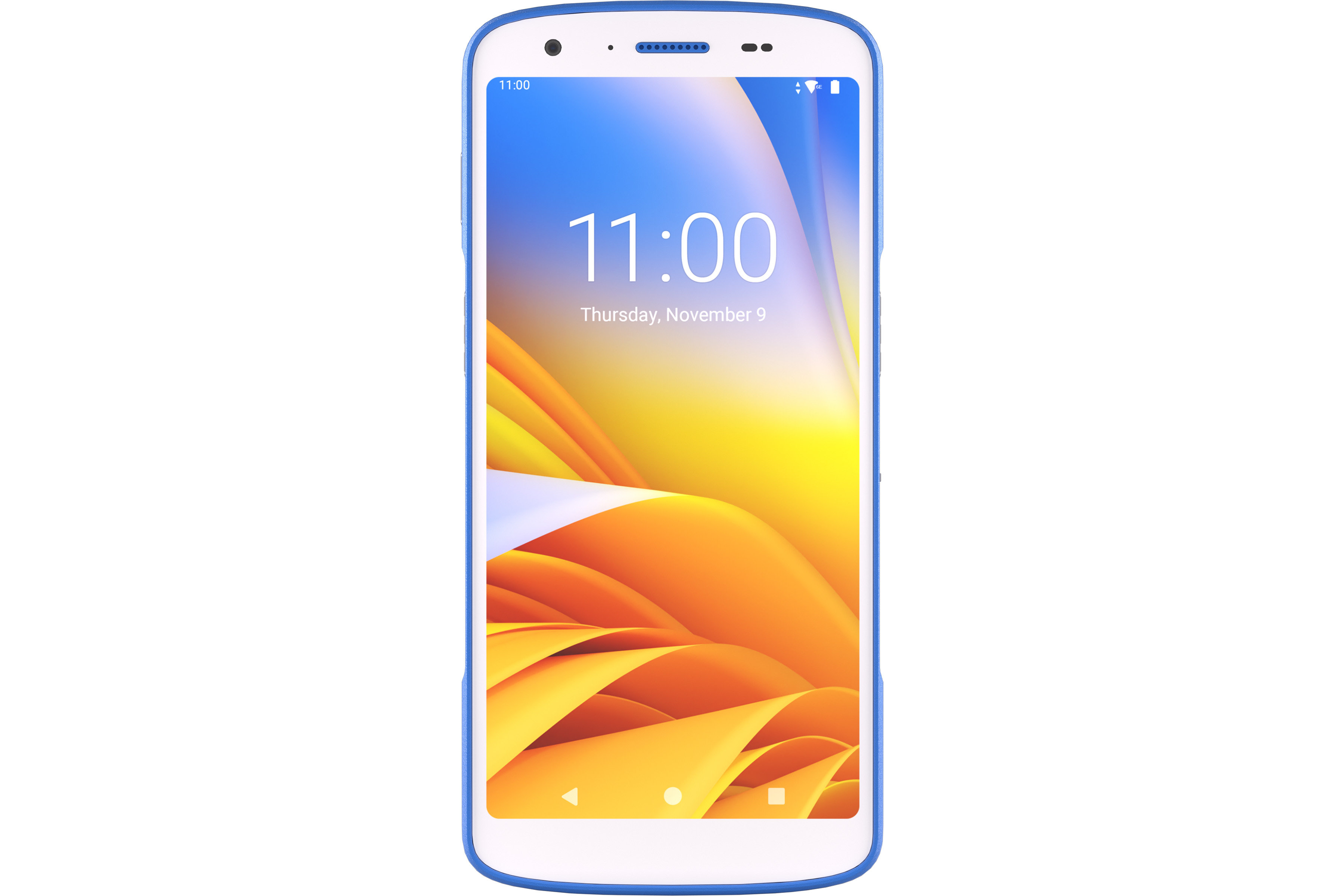
Traceability begins the moment a patient arrives: a nurse prints a Zebra RFID Label on the spot and fastens it around their wrist, turning a simple band into a real-time link between the patient and every team that will care for them. From that moment on, Zebra FX7500 Fixed RFID Readers installed discreetly throughout the building automatically track their locations in the system, without anyone having to write anything down. Clinical staff carry Zebra HC2x Series Mobile Computers fitted with a Zebra RFD40 UHF RFID Sled—compact, elegantly designed devices with smooth surfaces built to withstand repeated disinfection. At the patient's bedside, they can quickly read and validate information in seconds, rather than having to return to a desk to enter data later.
In the sterilisation unit, every instrument container is labelled and scanned at each stage of the cleaning cycle. When it reaches the operating theatre, the surgeon or nurse reads it alongside the patient's wristband, creating a direct, timestamped record of which instruments were used, when, and on whom. What once meant filling in multiple paper registers by hand now happens in a single read.
These handheld units are also provided to cleaning personnel to validate every disinfection upon completion. "Our cleaning staff no longer have to write the same information repeatedly," Herghea notes. "That saves time and reduces errors that happen when people are busy and working from memory."
The Zebra Difference: Outcome and Benefits
When the lab now flags a suspected infection, Herghea opens the Evomedix platform and immediately identifies the patient and their location. "Before RFID, identifying a single infectious case took around eight minutes of searching across multiple databases,” she says. “Now, it takes under a minute.” Across a full month, that workload once consumed roughly seven working days. Today, it takes a day.
Once a case is confirmed, every contact must be traced, their subsequent movements followed, and cleaning and sterilisation records verified across every space they passed through. All of that now lives in one place, accessible instantly. “Information captured on the mobile devices is transferred to the central database in real time," Herghea says. "And I can connect to the platform from my office and immediately see what activities have been performed in any ward.”
That speed ripples outward. Sixteen paper registers have been replaced by live digital records across 15 departments, from ICU and surgery to imaging and radiotherapy. Cleaning validations, sterilisation cycles, instrument usage, and other data that once lived on clipboards now live in a platform everyone can access instantly. The hours staff once spent reconciling and re-entering records are now spent with patients.
The system keeps expanding. IOCN is extending its traceability system to chemotherapy, so every step from treatment planning and drug preparation to delivery and administration can be digitally tracked. The hospital is also developing blood bag traceability, which would ensure every unit can be monitored throughout its lifecycle. Linen traceability will follow, allowing the team to track every item through external laundry and back.
None of it would be possible without the confidence that the system holds. Having Zebra OneCare support means that if a device fails, a replacement is ready before the gap is felt. "This is vital because it's not a project that ends after a month," says Herghea. "We have to maintain it, develop it, and know that when something breaks, we are not left without answers."
Nearly a century after opening its doors, IOCN is building the digital foundation for the next generation of cancer care. A hospital where an epidemiologist can trace an outbreak in under a minute, where a surgeon can verify the sterilisation history of every instrument in seconds, and where no clinician has to choose between caring for a patient and updating a record. At IOCN, visibility is no longer something teams assemble in hindsight. It is built into every patient’s journey, from the moment a wristband is fitted to the moment a patient walks out the door.
Featured Products and Solutions