0:00 / 0:00

Success Story
Medifab cuts picking time by 50% and achieves near-perfect dispatch accuracy with Zebra RFID
For someone dealing with a mobility challenge, the right piece of equipment isn’t just a necessity, it’s the freedom to move and live more fully in everyday life. That understanding sits at the heart of New Zealand-based medical equipment manufacturer Medifab, where "Shaping Better Lives" is more than a motto.
Zebra Success Story: Medifab
Overview: Manufacturing Challenge
Medifab set out to find a more efficient, streamlined picking and dispatch process with automated verification and real-time inventory visibility.
Benefits / Outcomes
- Near-perfect dispatch accuracy
- >50% increase in picking efficiency
- Orders now verified in 10 seconds
- Up to 10 minutes saved per task

About Medifab
For someone dealing with a mobility challenge, the right piece of equipment isn’t just a necessity, it’s the freedom to move and live more fully in everyday life. That understanding sits at the heart of New Zealand-based medical equipment manufacturer Medifab, where "Shaping Better Lives" is more than a motto. Rather, it’s a promise reflected in every wheelchair accessory, rehabilitation tool, and mobility solution the company builds. Building on that, Medifab set out to modernise its warehousing processes, moving to faster, automated workflows, an outcome it achieved with Zebra. This has enabled its manufacturing and warehousing facilities in New Zealand to smoothly pick, pack, and deliver every finished equipment shipment correctly and on time.
The Challenge
For over three decades, Medifab managed picking and dispatch with a barcode scanning system, supported by checklists, data entry, and paper order sheets with handwritten serial numbers. The process had served the business well through years of growth. As order volumes, product ranges, and international sites expanded, Medifab looked for a way to verify products and orders faster and capture that information automatically. “As we grew, we wanted a system that could take on more of the verification and give us greater certainty, so we could keep upholding the trust that customers place in us,” explains Shaun McDonald, Integrations Engineer at Medifab.
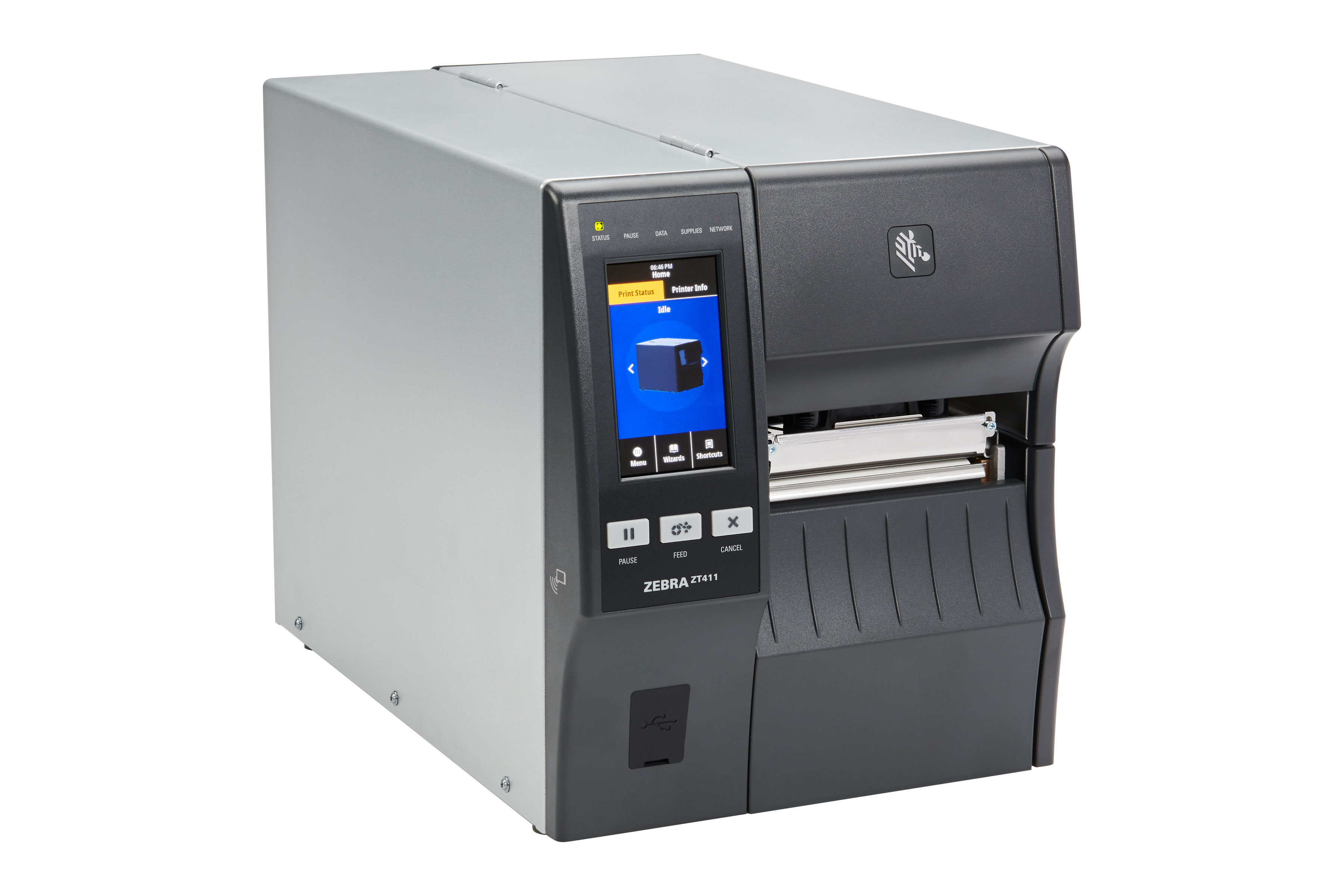
Medifab collaborated with Synergic Technologies to resolve this challenge. Synergic, a trusted technology partner, recommended Zebra’s radio-frequency identification (RFID) system. “From the start, a trusted recommendation by Synergic and Zebra’s proven reputation made it clear that this was the right solution for us,” says McDonald. “We mapped out areas where RFID could completely take over the manual tasks, and where it could speed up tasks with minimal human input.” In December 2024, a new workflow was introduced for picking followed by dispatch in 2025. The system comprises Zebra's MC33 RFID Series Handheld Mobile Computers for picking, supported by the ZT400 Series Industrial Printers for label printing, and the FX9600 Fixed RFID Reader for shipment scans.
McDonald worked with his team leaders to develop a work instruction that helped onboard all their warehouse employees and familiarise them with the new devices. It didn’t take long for employees to start trusting the system. Almost immediately, it eased the workload on warehouse teams and freed up time to focus on higher-value work. “Once they realised that using the Zebra system could prove exactly when an item had been handled and locate it or help find something that was missing quickly, they were amazed,” says McDonald.
With Zebra’s RFID readers, we’ve cut picking time by more than 50% while improving accuracy. A job that once took 10-15 minutes can now be completed correctly in just five minutes.
The Solution
Since the switch, warehouse operations are much simpler and streamlined. A picker begins by assigning themselves a job in the enterprise resource planning (ERP) system, replacing the previous manual sign-off process. Next, they collect their MC3300 Series RFID mobile computer, where they find each order and the location of each item on the interface. The interface directs employees straight to the correct product. Then they bring it back to their station, verify and pack each order. “With Zebra’s RFID devices, we’ve cut picking time by more than 50% while improving accuracy. A job that once took 10-15 minutes can now be completed correctly in just five minutes,” explains McDonald. Once everything is collected, it’s packed and labelled with a shipping tag printed via a ZT4 RFID label printer.
Once packed, the employee can place the package into the nesting station, a shielded box equipped with the FX96 fixed RFID reader. At the press of a button, the nesting station confirms whether all the correct products are inside. It automatically updates the system or flags missing or extra items. “The nesting station gives us a formal completeness check at the point of packing and takes just 10 seconds,” says McDonald. This created a smoother workflow and gives Medifab the confidence that the orders are packed correctly and ready for dispatch.
“Since introducing Zebra, we have near-perfect dispatch accuracy across every shipment. This has reinforced the trust our customers place in us to deliver every order correctly,” explains McDonald. “Having the system in place gives us certainty without having to sacrifice efficiency and speed.” Locating a specific item previously relied on a visual search. Now, if an item is misplaced, a worker can use the Zebra mobile computer to find it.
The Zebra Difference: Outcome and Benefits
Today, the warehouse runs with a level of visibility and traceability that wasn't possible before. Zebra’s MotionWorks™ Enterprise software collects all the data from all the RFID readers in circulation to create an automated, real-time inventory ecosystem. “With RFID in place, every tag is tracked in the ERP system, so we always know where it was last seen, whether that's an aisle, a nesting station, or a door. And since dispatched items are verified and updated, inventory accuracy automatically follows because you always know what’s left the warehouse,” McDonald says. Every product's movement is now on record, creating accurate serial and lot histories. That makes it far easier to investigate quality issues, manage recalls, and trace items back to their point of manufacture – an unanticipated benefit that’s helped boost customer confidence too.
In the past, when a customer reported a missing item, Medifab would resolve it by replacing the item, as the paper record could not confirm what happened. “We were relying on handwritten notes to verify orders, but a comment on a page doesn't prove what happened. Now, we can look it up and confirm exactly what was shipped out and when and go back to the customer with a verified dispatch,” explains McDonald. A capability that supports faster query resolution and avoids unnecessary replacements.
In 2026, when Medifab consolidated and moved into a new warehouse near Christchurch, RFID was pivotal to the move. “I don’t know what we would have done without it. We set up an arch of Zebra RFID readers and moved all goods through it. I knew exactly what items had been moved and could close down the old facility in the system confidently,” McDonald says.
Medifab is now positioned to automate even more workflows in the future. This includes introducing visibility over all products and automating dispatch with RFID readers on the warehouse aisles and doors. Currently, the team is focused on refining existing processes before scaling. “Once we leverage what we have to full capacity, we want more technology and automation. So that we can continue to reduce manual data entry, improve inventory accuracy, and streamline warehouse operations,” says McDonald.
With Zebra’s help, Medifab can continue to deliver on its promise to customers – through every shelf, pick, and delivery. Because each accurate order and on-time shipment helps ensure that the people who depend on Medifab's products receive the support they need, exactly when they need it.
Featured Products and Solutions