0:00 / 0:00

Success Story
Scapino improves stock visibility and reaches above 97% inventory accuracy with Zebra RFID
Scapino is one of the Netherlands' largest value-fashion retailers of footwear, clothing, and sports equipment, with around 200 stores and a nationwide e-commerce business.
Zebra Success Story: Scapino
Overview: Retail Challenge
The Dutch retailer wanted to improve inventory accuracy and visibility across its stores to reduce replenishment errors, inefficient e-commerce fulfilment and labour-intensive physical counts, while building a scalable foundation for future RFID-enabled processes.
Benefits / Outcomes
- Inventory accuracy increased from ~85% to 97% or higher
- Achieved an average of 1.13 packages sent per customer order
- 20,000–25,000 items can now be counted in about 30–45 minutes
- Inventory counts now performed weekly instead of yearly

About Scapino
For Scapino, style and affordability are not supposed to be competing ideas. The Dutch retailer has long built its business around the belief that the two can go hand in hand, bringing practical essentials, fashion, and well-known sportswear brands within reach of families across the Netherlands. That philosophy goes back to Scapino's origins and its enduring promise of “more quality for less.”
Today, Scapino is one of the Netherlands' largest value-fashion retailers of footwear, clothing, and sports equipment, with around 200 stores and a nationwide e-commerce business. Staying close to customers remains central to the brand. Staying true to its mission increasingly depends on something shoppers rarely see: a supply chain that knows where products are and can support an order effectively, whether it begins online or on the shop floor. For Scapino, improving that foundation meant turning to radio frequency identification (RFID) and Zebra Technologies.
The Challenge
Before using RFID, Scapino generally conducted physical inventory counts only once or twice a year. With so much time between counts, its teams had limited opportunities to identify and correct discrepancies, and accuracy averaged around 85%. “If we had inventory inaccuracies, we might only correct them once or twice a year,” explains Johannes Drost, IT Director at Scapino. “That meant there would only be a short period when our inventory was truly accurate.” This led to either over- or under-replenishing products, which caused unnecessary delays or costs.
The problem became particularly visible in e-commerce fulfilment. “Sometimes we ended up sending three packages to one customer just to fulfil a single order,” Drost explains. “That meant three people searching for the products and three sets of transport costs, while the customer had only placed one order.” For a retailer built around value, those extra touches and costs worked against that promise.
While before some orders might include three packages, we’ve reduced the average number of packages sent per order to 1.13, fulfilling practically each order in a single shipment and reducing related costs.
The Solution
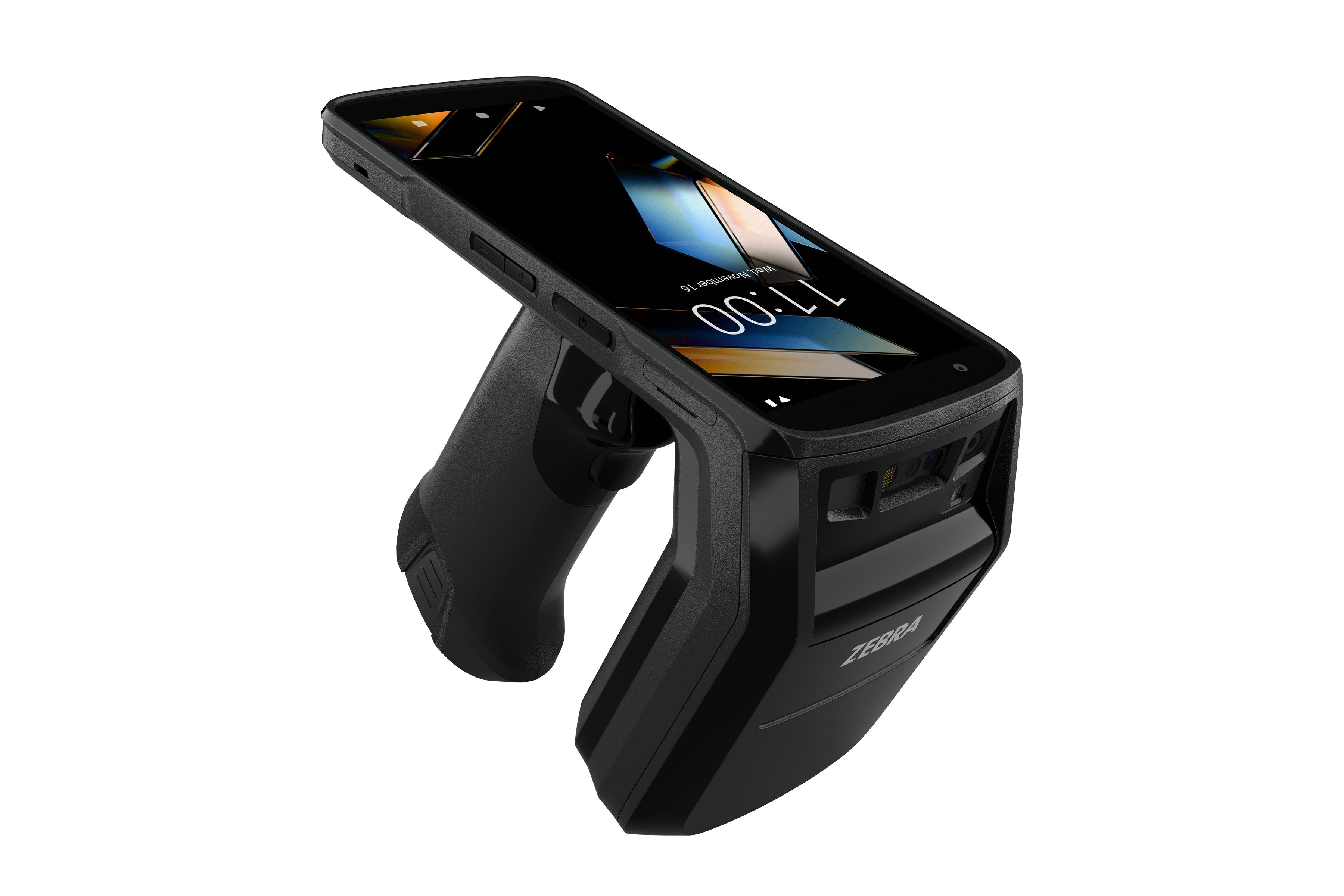
To address those inefficiencies, Scapino began looking for technology that could give its teams a more accurate and timely view of inventory. RFID offered a way to improve visibility across stores while laying the foundation for other processes Scapino wanted to modernise, such as goods receiving, checkout, e-commerce fulfilment, and loss prevention. “From a business perspective, we wanted a consistent and predictable supply chain,” notes Drost. “From an IT perspective, we also wanted a stable, standardised architecture, both software and hardware, that is relevant today and for the next five to ten years.” After considering cost and RFID performance alongside ergonomics, integration with its existing IT environment, and long-term support, the company chose Zebra Technologies and decided to implement Zebra TC22R Integrated Handheld RFID Readers.
Comfort was a priority for Scapino because employees carry the readers throughout inventory counts. Some competing devices felt noticeably front-heavy, while Zebra's TC22R offered a more balanced experience. “The device is lightweight, well-balanced, and comfortable to use, which matters when someone is walking through a store taking inventory for 30 minutes or more,” says Drost.
Scapino piloted the solution in a small number of stores before expanding it across the estate. A train-the-trainer model, supported by sales and regional managers, helped employees adopt the new process. Simac IT NL supports the store hardware environment, while Checkpoint provides the RFID software and implementation expertise. “Checkpoint has taken a very pragmatic approach,” says Drost. “They bring people who understand the technology, remain flexible as we learn, and help us move towards greater standardisation.”
An associate now walks once a week through the store with a Zebra TC22R reader, capturing signals from RFID-tagged merchandise across aisles, displays, and clothing rails. The information is collected through Checkpoint's ItemOptix RFID inventory management solution, then passed into Scapino's systems for processing or review.
Scapino also chose Zebra OneCare™ to support the devices, with Simac continuing to provide first-line hardware support. “So far, the devices have performed very well in the six to seven months of use across our stores,” notes Drost. “That gives us confidence as we continue expanding how we use them.”
The Zebra Difference: Outcome and Benefits
The most immediate impact is the quality and frequency of Scapino's inventory data. Inventory accuracy has increased from 85% to an average of around 97% or higher. With the Zebra TC22R readers, a task that previously required an entire team for a full day once or twice a year can now be completed weekly by one person. “Today, one employee can count approximately 20,000 to 25,000 items in 30 to 45 minutes,” explains Drost. “Previously, a whole team could spend an entire day doing that. Now we can do it every week and know what is actually in the store. For us, that is a double benefit: lower costs and better results.” That balance supports the same principle Scapino brings to its customers: getting more value from every part of the operation.
For employees, weekly inventory counts with Zebra TC22R readers have made the process familiar rather than disruptive. Associates can see their progress, identify missed items, and make another pass when needed. “Employees have much more control over how they perform the count,” adds Drost. “They receive direct feedback on whether the job has been completed properly.” Around 90% to 95% of stores are now performing strongly with the process.
“Previously, some orders might include three packages. We’ve reduced the average number of packages sent per order to 1.13, fulfilling practically each order in a single shipment and reducing related costs,” says Drost. Better visibility is also helping Scapino decide where stock should be located and identify supply chain discrepancies sooner. As RFID expands into goods receiving, the retailer expects to pinpoint more precisely whether issues originate with suppliers, logistics, or transportation.
Scapino is only partway through its RFID journey. Goods receiving is the next priority, followed by RFID-enabled checkout, shipments, e-commerce fulfilment, and eventually loss prevention. Further ahead, the retailer is also watching Zebra's development of artificial intelligence-enabled store technologies. These capabilities are not on the immediate roadmap, but they reflect the kind of innovation Scapino wants its technology ecosystem to support over time.
The project is strengthening the technology ecosystem behind Scapino's wider transformation. Zebra, Simac, and Checkpoint each bring a different part of the solution, all working with Scapino towards a shared objective. “We are working together rather than pursuing separate priorities. In that sense, one plus one becomes three,” says Drost.
“I like a collaborator that inspires us by showing what's possible and incorporates that innovation into its standard solutions, so we can benefit from it,” adds Drost. “It's very interesting to see what Zebra is doing in that area.” As RFID reaches more parts of the business, Scapino is building the stable, predictable supply chain it set out to create, helping ensure that “more quality for less” is supported by a more accurate and efficient operation behind the scenes.
Featured Products and Solutions