0:00 / 0:00

Speed gets all the headlines in fulfillment centers. Warehouses and distribution hubs across the globe are facing immense pressure from tighter service-level agreements built on continually rising consumer expectations. And the answer has typically been more speed through automation. Operations leaders want faster conveyors and faster sortation. But what about maintaining that speed?
Can’t Stop Moving
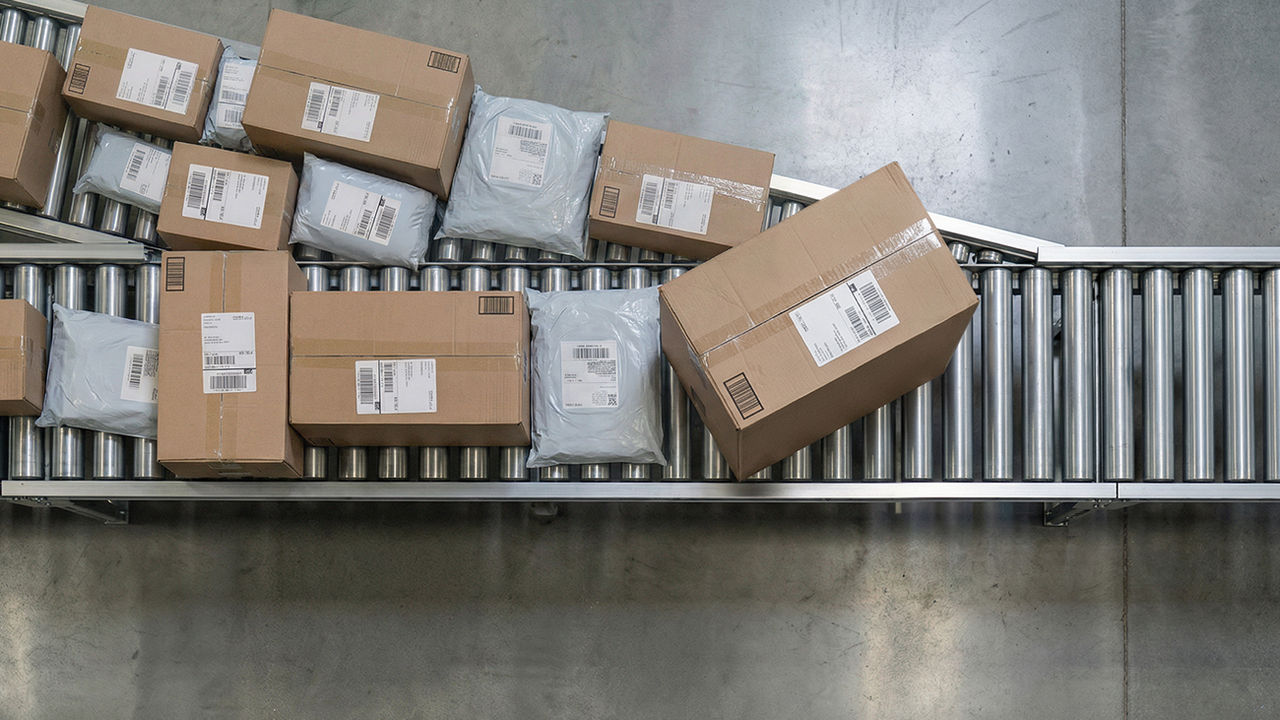
Let’s back up. In high-volume fulfillment centers, conveyor networks and automated sorters have one job: never stop running. It’s a system made up of various decision points and a lot of moving parts whose continuous motion is essential to the flow of receiving, sorting, picking, packing, and shipping.
In this world, delays are measured in seconds because every second has consequences that can stack up quickly: recirculating packages, reduced throughput, delayed shipments, missed deadlines, and unmet business objectives.
The fear of this ripple effect creates operational stress and pressure to treat every potential slowdown as critical. Any time a conveyor line gets jammed, it triggers a response. The jam has to be investigated and manually addressed as quickly as possible to keep the system operational. But the issue is not only the jam itself. It is the uncertainty around it.
The “Jam Response”
False jam alerts can trigger the same “jam response.” When a temporary slowdown is mistaken for a real blockage, outbound lanes can be unnecessarily shut down, forcing packages to recirculate back through the system. Teams are pulled away from higher-value tasks into investigations, conveyors can get halted when they don’t need to, packages recirculate, and productivity takes a hit.
False jams create almost as much slowdown as real ones, cause repeated interruptions, lead to eventual “alert fatigue” from responding teams, and build up a costly pattern of inefficient labor use and less predictable throughput. This is where smarter, machine vision–enabled technology can enhance and protect your automation investments.
Building more automation into warehouses and distribution centers is no longer a distant priority. It is an active mandate. Zebra’s latest warehousing vision research found that 70% of decision-makers are under high pressure to modernize warehouse operations, and 87% agree that without investing in technology to improve warehouse operations, their organization will fail to meet business objectives.
Speed and throughput will always be the end goals of modernization. The next wave of warehouse technology in fulfillment is not going to be about accelerating movement but about protecting the efficiency and capacity of your existing systems through machine vision.
From Traditional Sensors To Practical AI
Traditional jam detection relies on photoelectric sensors which often have a limited view: blocked or not blocked. This binary view is simply no longer enough. Conveyor lines are faster. Package flow is denser. Parcels vary widely in shape, weight, and material. For these sensors, a temporary slowdown can often look like a real jam, and the only thing that’s certain is the continued accumulation of false jam alerts that trigger responses that lead to actual slowdowns and costly package recirculation.
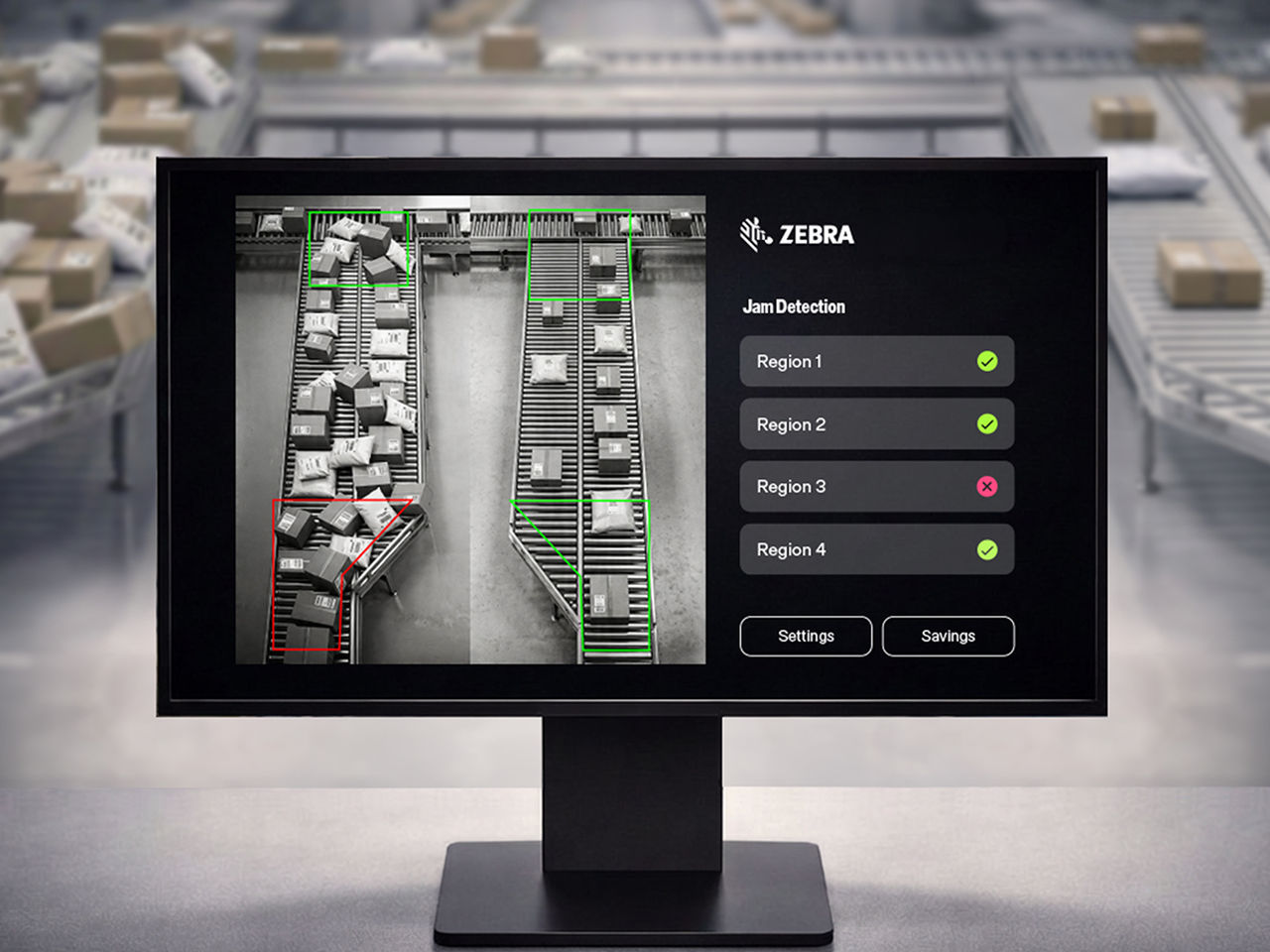
The context behind every potential jam has never been more critical. Zebra’s approach to jam detection utilizes machine vision, powered by practical AI to continuously inspect a live video feed or rapid series of images. By analyzing this visual data, the AI can form a highly accurate, objective opinion on the actual status of the packages and their flow, providing that context in a way that’s precise, predictable, and automated.
Smart cameras mounted above the conveyor monitor package flow in real time, while software analyzes factors such as velocity, congestion, and flow patterns using edge computing; meaning the processing happens instantly, right at the point of activity. When the system identifies a true jam, operators can receive timely alerts with visual evidence so they know where to respond and what to expect. When the system recognizes a false jam, packages can continue moving and personnel can stay focused on more important work.
There was a time when traditional sensors were enough. But not anymore; not when they can cause mistakes in the process of fixing them. Thanks to recent, massive advancements in both AI software and edge-processing hardware, we can finally solve these long-standing fulfillment problems. Zebra’s research shows that 71% of decision-makers cite mitigating errors as the top driver for warehouse automation.
AI-powered jam detection is designed to do exactly that. It’s a practical use of AI to solve a modern-day fulfillment problem by minimizing the manual intervention and labor impact associated with clearing false alerts. It provides operations teams a scalable step they can take toward modernization with immediate ROI. It also offers maintenance teams more reliability and predictability in their operation. And it gives associates a tool that supports and improves their productivity without the need for any additional training.
Automating fulfillment is a modern-day necessity. But in an environment where speed is the be-all, end-all, how you empower your existing automation can matter even more than how much you automate.