0:00 / 0:00

Success Story
Maersk Australia increases daily order throughput by 25% with Zebra-powered automation
Around the world, online shoppers increasingly expect their orders to arrive in days, not weeks. For Maersk, the shift in fulfilment demands has been impossible to ignore.
Zebra Success Story: Maersk Australia
Overview: Transportation and Logistics Challenge
The company's goal was to build efficient, scalable warehouse operations after expanding into warehousing for the first time—reducing errors, increasing throughput, and ensuring reliable delivery timelines across a fast-growing network of sites.
Benefits / Outcomes
- 25% increase in daily order picking and shipping
- Higher warehouse accuracy
- Continuous cycle counting, reducing inventory errors
- Stronger traceability for high-value customer shipments
- Significant paper reduction
- Lower downtime and maintenance requirements
Customer
Maersk Australia
Australia
Partner
Sonar Technologies International
Industry
Transportation and Logistics
Solutions
About Maersk Australia
Around the world, online shoppers increasingly expect their orders to arrive in days, not weeks. Behind that promise sits a warehousing ecosystem that has grown dramatically in recent years, as brands race to build faster, more resilient fulfilment networks capable of meeting modern delivery expectations. For Maersk—one of the world’s largest logistics companies with nearly a century of history, operations in 130 countries, and more than 100,000 employees—the shift in fulfilment demands has been impossible to ignore.
In Australia, where Maersk plays a key role in connecting businesses to global markets, their 2021 expansion opened the door to warehousing for the first time. “Bringing warehousing into the supply chain added significant value to Maersk’s integrator strategy. We’re moving freight from one country to another—and we’re adding value inside the warehouse, whether that’s repacking, preparing retail orders, or supporting B2C fulfilment,” says Shishir Ahmed, Information Technology Manager at Maersk.
From day one, Maersk Australia set out to build an efficient and scalable warehouse operation—one that could support sustainable growth and deliver consistently for customers. To achieve this vision, the company turned to Zebra Technologies, whose proven solutions aligned with Maersk’s goals for speed, accuracy, and resilience.
The Challenge
Since entering the warehousing space, Maersk has grown to 10 facilities across Australia, the smallest spanning 18,000 square meters, about 14.4 Olympic swimming pools. Across these sites, technology and automation play a central role in speeding up picking and packing, error reduction, and improving delivery predictability, providing customers greater confidence in delivery timelines. “The COVID-19 pandemic taught us a significant lesson. When operations were interrupted so our people could stay safe at home, we realised automation could support continuity and give our teams more time to focus on higher-value work,” says Ahmed. “During that time, resources were always tight, and it was hard to get people. That’s when we started planning our shift to automation."
Following an extensive evaluation period and almost a year of proof-of-concept testing, Maersk chose to standardise warehouse operations on a Zebra technology stack. Implementation partner Sonar Technology played a key role in setting up and tailoring each device. “There’s a lot of customisation when bringing a device into Maersk—configuration settings, barcode behaviour, etc. Sonar helped us align all of that,” Ahmed explains. Maersk, Sonar, and Zebra then worked together to train supervisors and IT teams to adopt and scale the new system to their respective departments.
Zebra devices and automation help us achieve our SLAs and reduce labour costs with smoother, more efficient workflows. At peak season, like Black Friday, this setup will help process thousands of orders on time.
The Solution
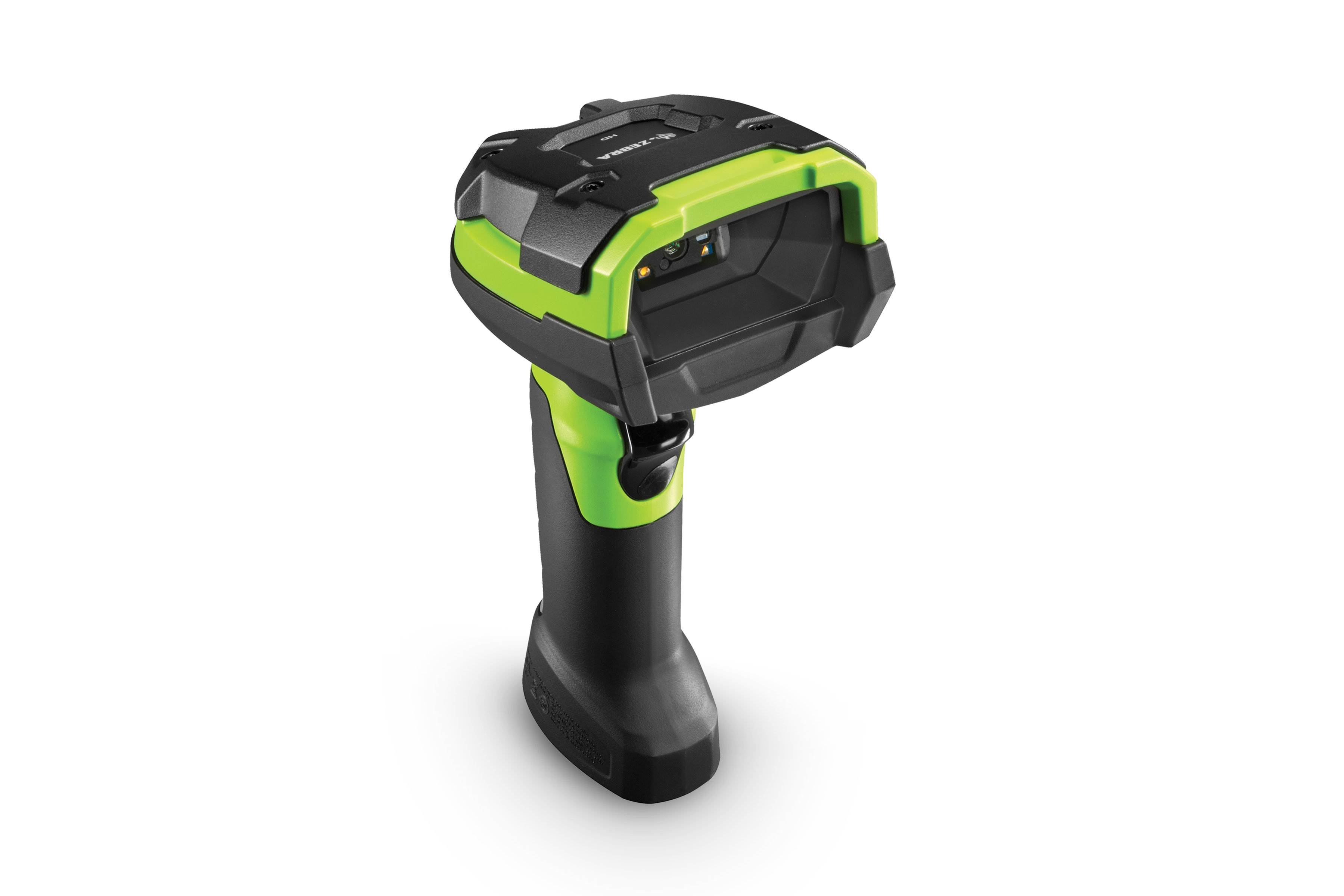
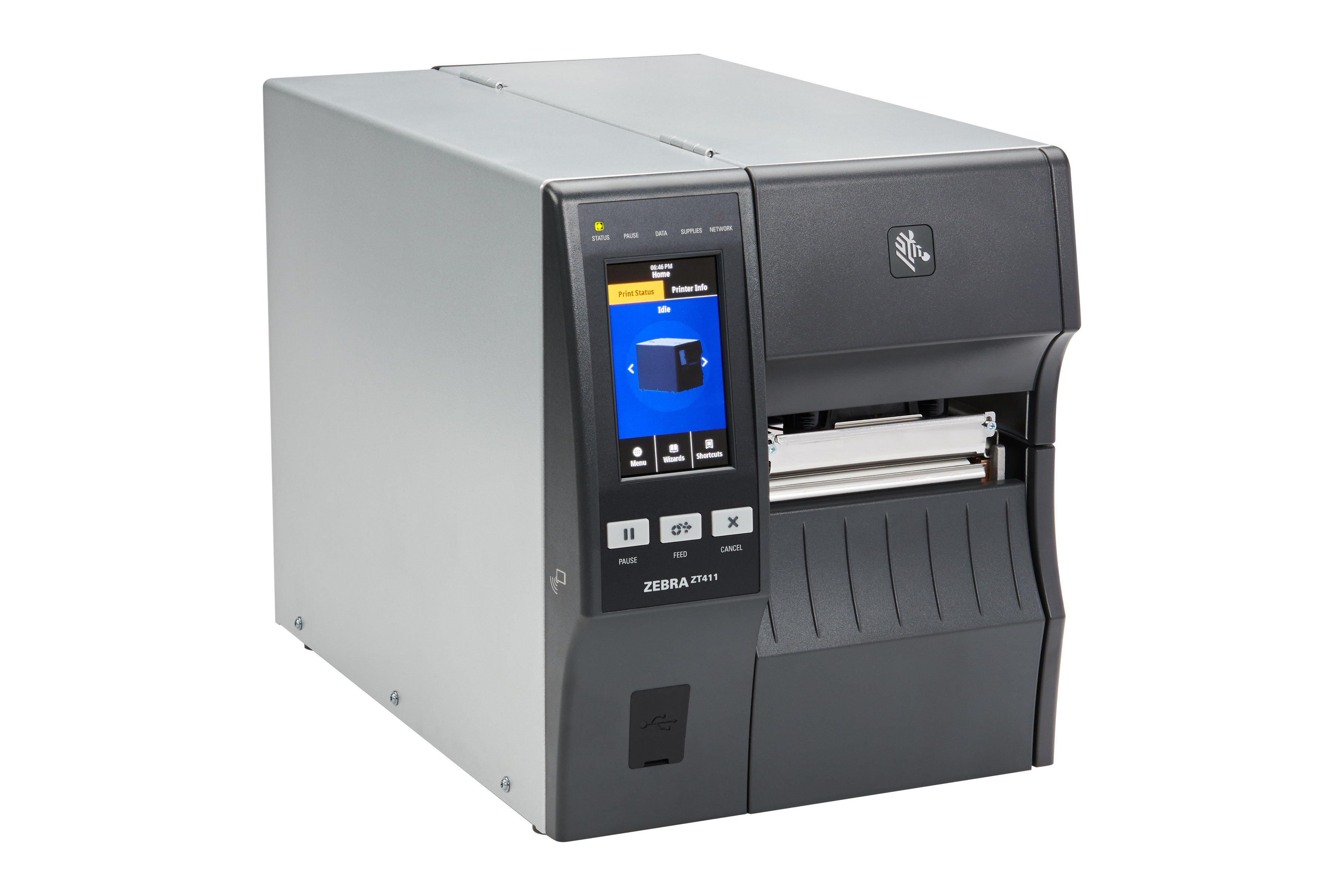
To support every step of the warehouse flow, Maersk adopted a range of Zebra devices, chosen for their speed, ruggedness, and reliability. The Zebra TC5X Series, MC3300ax, and MC3400 Series mobile computers form the core of daily activity, giving workers fast, stable tools for scanning, locating stock and moving through large warehouse zones. For teams that benefit from more flexibility, Maersk introduced Zebra DS3600 Series Ultra-Rugged Barcode Scanners and RS5100 Bluetooth Wearable ring scanners, allowing operators to scan while keeping both hands free to handle products or work on conveyors. Printing tasks are handled through Zebra ZQ5 Series and ZQ610 Plus mobile printers—useful for generating labels exactly where they’re needed—and Zebra ZT411 and ZT231 industrial printers for the heavier volumes required at packing benches and outbound lanes.
Today, some of Maersk’s Zebra devices—including TC5X Series mobile computers and RS5100 Bluetooth ring scanners—run the company’s warehouse control system (WCS), which automates task assignment and guides workers through each step. As soon as a task is released, the WCS sends it directly to the worker’s device, directing them to the correct location and automatically allocating the next job the moment the previous one is finished.
The WCS also includes labour management system (LMS) capabilities that help optimise how work is distributed across the warehouse. “The system optimises both put-away and picking,” Ahmed explains. “For instance, by grouping tasks in the same area, it reduces walking time. We keep reviewing and refining those logics.”
The Zebra Difference: Outcome and Benefits
With this automated workflow, Maersk Australia improves accuracy throughout the warehouse. “With Zebra scanners, there is no more confusion when picking and packing a product. We scan it before packing and labelling, and then once more before loading it onto a truck to confirm we’ve got the right item,” Ahmed explains.
Accuracy doesn’t come from process alone—the devices play a critical role, too. For example, the MC3400 Series Mobile Computers combine short-, mid- and long-range scanning in one unit, reducing mis-scans—especially when reaching barcodes placed high on warehouse racks. “That has reduced a lot of inefficiency or error during the put-away,” Ahmed adds.
Maersk has successfully delivered greater transparency and accuracy to their inventory management. Instead of relying on large, infrequent stock takes, the system now performs continuous cycle counts by prompting workers during normal picking to confirm remaining quantities in a location. This built-in check reduces errors and keeps inventory records up to date without disrupting operations.
The detailed traceability captured through the devices—showing exactly when an item was picked, packed or loaded—also improves service, allowing Maersk to verify and investigate shipment-related questions quickly. “This lets us meet the demands of some customers who offer higher-value products that require such data capturing,” Ahmed notes.
With more automation and transparency, Maersk Australia is now moving orders through its warehouses faster. Improved put-away accuracy—ensuring items are stored in the correct location—means workers can locate stock more quickly during picking. Since automated workflows were introduced, this has contributed to a 25% increase in daily order picking and shipping. “Zebra devices and automation help us achieve our SLAs and reduce labour costs with smoother, more efficient workflows. At peak season, like Black Friday, this setup helps us process thousands of orders on time,” Ahmed explains.
The durable, dependable Zebra devices also reduce downtime and repair costs for Maersk’s IT teams. “Zebra devices are user-friendly and intuitive, and also rugged, with strong batteries,” Ahmed explains. “For instance, the ZT231 printers are extremely reliable—you can’t even compare them with competing products. They require far less maintenance.” And when a device does eventually need attention, Zebra’s support team repairs and returns it quickly, keeping operations moving.
Maersk Australia is also seeing meaningful sustainability benefits—an area aligned with Maersk’s wider ESG (Environmental, Social, and Governance) commitment to reduce resource waste across its logistics operations. Before introducing automated workflows, warehouse teams relied on thousands of printed picking slips—paper sheets listing the items and locations for each order. With Zebra devices now guiding workers digitally through each task and allocating the next order automatically, those slips are no longer needed. “That alone saves us thousands and thousands of pages daily,” says Ahmed, noting that the reduction has also eliminated the frequent maintenance previously required for document printers.
As Maersk Australia prepares for significant expansion—including plans to double its warehouse footprint within the next two years—automation has become the backbone of its next chapter. It’s also gained a strong foundation for growth built on accurate scanning, connected frontline workflows, and data-driven processes. Moving forward, the team is exploring how fixed scanning, linerless printing, machine vision, and RFID can drive even greater efficiency as new sites come online. “The new warehouses will be even more automated, and we’ll adopt any new technology Zebra introduces to support the business,” Ahmed explains.
Featured Products and Solutions